
Welcome to this article, which is an in-depth guide to single facer machines, and if you’re looking for any information about single facer machines, you’ll find it here. So read on to learn more.
1. What is a single facer machine?
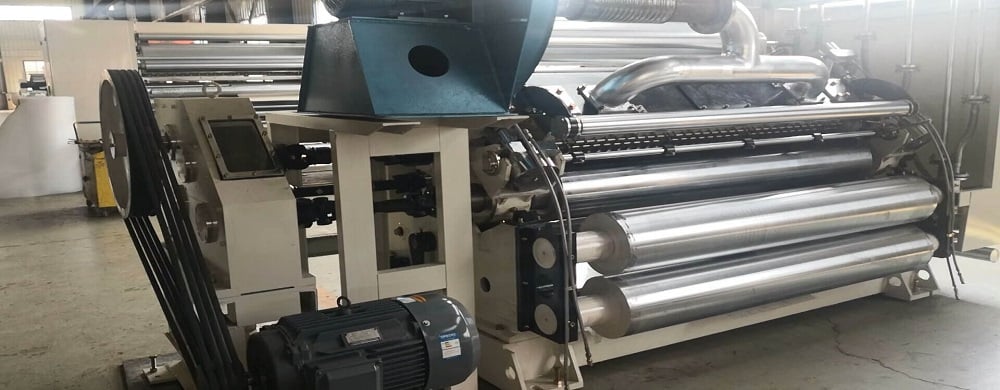
The single-facer machine is one of the important pieces of equipment of the corrugated board production line. The forming quality of the corrugated board has a great relationship with the correct use and maintenance of the single facer machine. A single-facer machine is a cardboard machine that produces corrugated core paper (the special name for corrugated paper in cardboard). In the corrugated packaging industry, it is known as the heart of the “corrugated cardboard production line”.
2. What kinds of single facer machines are there?
There are two types of single facer machines, one is a common traditional single facer machine, and the other is a new type of cassette-type single facer machine. The traditional single facer machine has a low investment cost and low technical threshold and is suitable for small and medium-sized cardboard manufacturers. The cassette-type single-sided machine belongs to the high-configuration single facer machine. The time for replacing the corrugating roller is short, and the demand for short-term order replacement can be realized, which is suitable for large-volume cardboard manufacturers.
3. How does a single facer machine works?
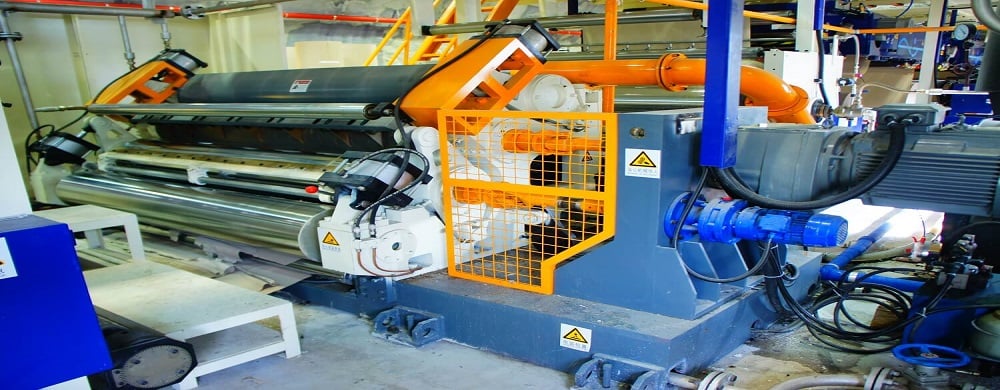
The main components of the single facer machine are a paper mill roll stand, corrugating roller, pressure roller, preheating roller, gluing device, pneumatic device, paper guide, vacuum adsorption device, etc.
First, the corrugated core paper is heated, and then the corrugated roll is used to make the required corrugated shape. The corrugated paper is bonded to form a single facer corrugated board. The heating methods of the core paper include steam heating, electric heating, and oil heating. Single facer machined flutes can be customized or customized.

4. Why need a single facer machine?
The operating process of the single facer machine includes the following: creating conditions for unwinding and manipulating the face paper and core paper; pre-processing and preheating the core paper and the face paper; preparing for corrugating and bonding processes; forming a straight core paper specific corrugation; applying adhesive to the newly formed corrugation tip; bonding core paper and facial paper together; transporting the single-faced paper web to the conveyer bridge. If the single-facer paper web delivered to other processes has quality problems, the other processes cannot be repaired or compensated at all. Therefore, the single facer machine is very important for carton production.
The quality of the corrugated board produced by the single facer corrugated machine directly affects the production cost of the carton. The base paper is the main material for the production of cartons. About 75% of the cost of carton production comes from raw materials. If the corrugated board produced by the single facer is unqualified or defective, it means the waste of raw paper and other materials, an increase in production costs, and a decrease in production profits.
5. What are the structural features of a single facer machine?
- There are some features of a single facer machine below:
- The paper guiding adopts wind adsorption, keeping the stability of flutes under the condition of high speed.
- The corrugated paper is adsorbed to the middle corrugated roller to form a negative pressure zone of 180°and then to finish the rolling of corrugation through the vacuum box by a fan.
- The width of the suction slot of the lower corrugated roller is not more than 2mm, able to reduce the stripe mark on the single side of corrugated cardboard.
- The transmission part adopts universal joint transmission and separates the vibration source, which makes the maintainability higher, the transmission more stable, and the operation more reliable.
- The reducer casing adopts oil bath lubrication and closed gear transmission, reducing the vibration of the machine.
- This machine adopts an auto-cycle glue supply and pneumatic control glue supply and returns, making it characterized by buffering effect.
- The glue roller surface is treated with special mesh nicking and chrome plating. Get a quote about the single facer corrugation machine.
6. How to operate a single facer machine?
The single facer Machine process is a critical component to the manufacturer of the high-quality combined board.
The basic Single facer operation must do the following.
- Allow for unwinding and controlling the single face liner and medium.
- Preheat/Precondition the liner and medium to prepare them for the flute forming and bonding process.
- From the flat medium web into its characteristic fluted shape.
- Apply adhesive to the tip of the newly formed flute.
- Join the medium with the single face liner.
- Transport the single-face web into the bridge.
7. What are the points to be considered in single-facer machine operation?
There are some tips below:
1) Unwinding and tension control
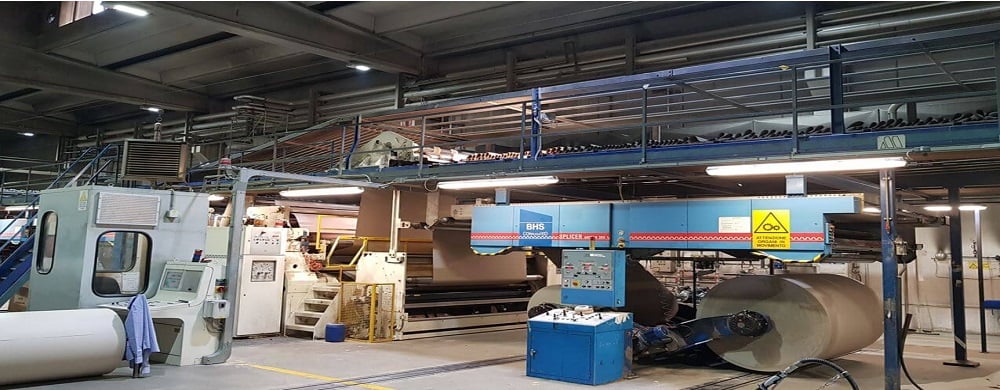
At the single facer corrugation machine, a roll of the liner is positioned on one side of the station. A roll of the medium is positioned on the opposite side. Each roll is supported by a roll stand that enables the paper to unwind freely as it is pulled into the single-facer corrugation machine. Typically two roll stands exist for the liner and two roll stands for the medium. This makes it possible to prepare one roll for use while another roll is unwinding. When a running roll is completed or an order requires a change in the paper the standby roll can be spliced in without stopping the machine.
Tension must be maintained on the paper as it unwinds to keep it tracking straight into the single facer corrugation machine and prevent wrinkling. Constant tension is maintained by applying pressure to the brake mounted on the rotating core chuck that holds the roll in position. The brake pressure requirement change as the diameter of the roll is decreased.
A full-diameter roll requires greater brake pressure than necessary toward the end of the roll. Early roll stands required the operator to make periodic manual adjustments to the brake tension. The roll stand used today automatically lessen the pressure as the roll diameter decrease.
2) Preheating & Preconditioning
Preheating and preconditioning are the processes of preparing the medium and liner, respectively for the fluting and the bonding by adding heat. Heat and moisture are added to the corrugating medium in the preconditioning process to soften the fiber and make the fiber more pliable. This enables the flutes to form without fracturing or losing there shape. The heat was added to the liner to begin the gelatinization process of the adhesive.
3) Flute Formation and Bonding
Flute formation and bonding of the fluted medium to the single face liner occur in the single facer corrugation machine. The basic components of the single face process have remained essentially the same since the beginning of the corrugating industry. The corrugating rolls are a set of grooved heated rolls that mesh together under pressure and impart a fluted shape to the medium as it passes through the nip. A hold-down mechanism keep the fluted medium in contact with the corrugating roll while an applicator roll applies a starch-based adhesive to the flute tip. A pressure roll secures the bond between the corrugation medium and the single facer liner.
8. What are the common single facer machine problems?
There are some common problems with single facer machines below:
1) Flute Fracture
This occurs during the forming of the flutes in the corrugating roller nip. It is usually observed as the single facer machine moves from the pressure roll nip up through the incline conveyor. The likely causes are dry medium moisture content below 6.0%, high tension somewhere in the medium path, or possibly a problem with the medium itself. Sources of high tension may be as follows:
Excessive brake at the roll stand;
Squeezing the roll with the roll stand chucks;
Pre-conditioner running below paper speed or not turning at all. Typically, the preconditioner should be run faster (1.0%-5.0%) than the medium so as not to induce any tension on the web.
2) Low Caliper
Low Caliper should not be confused with the crush since the flutes are supported by the lower corrugating roll during formation, adhesive application, and bonding to the single facer line. The following are a few potential causes:
- Liner or medium caliper:
The caliper of the liner and medium plus the flute height profile of the corrugating rolls determines what the best single facer caliper can be. With changes in pressing technologies and the use of high-performance papers, this caliper may no longer be what people are familiar with seeing.
The caliper of the liner and medium plus the flute height profile of the corrugating rolls determines what the best single face caliper can be. With changes in pressing technologies and the use of high-performance papers, this caliper may no longer be what people are familiar with seeing.
- Tension:
Similar to flute fracture, excessive tension on the medium can cause improper flute formation and low caliper. Sources of tension are rolled stand brakes, slow or frozen preconditioner, squeezing the roll with the roll stand chuck, and problems within the splicer.
- Pressure:
Uneven or insufficient pressure exists along the corrugating roll nip, pressure roll nip, or both.
- Heat:
Sufficient heat energy must be available to drive moisture from the medium during the flute formation and set the memory of the flutes. Wet flutes are more susceptible to crushing later in the process.
- Sufficient force holding medium to lower corrugating roll :
Whether the single facer corrugation machine has one facer, sufficient force must exist to keep the medium against the lower corrugating roll. With a finger type of machine, it could be improper finger adjustment, a bent finger bar, or a finger with the wrong radius for a reconditioned roll. For a vacuum fingerless machine, this could be plugged vacuum pump.
- Excessive adhesive application:
This may cause wet flutes and their associated problems. Check roll parallelism M/A ratio, A/LCR ratio Starch temperature, and viscosity.
3) Blisters/ Delamination
These two defects are generally due to problems with heat transfer, and insufficient heat available for bonding. Blisters will occur somewhere within the web either continuously like a streak or intermittently. Delamination usually covers a large area in the sheet or occurs at the edge of the sheet.
4) Zipperboard
This is generally thought of as the opposite of delamination. In this case, there is often too much heat going into the liner, medium, or both. Thigh heat reduces adhesive penetration into the surface of the paper.
Leave A Comment