The corrugated packaging industry is undergoing a major transformation. Driven by e-commerce growth, shorter product life cycles, and increasing demand for customization, manufacturers are shifting from traditional mass production models to more flexible and on-demand production systems.
In this context, the comparison between digital printing vs flexo printing for corrugated boxes has become one of the most important topics for packaging factories worldwide.
This article provides a complete technical and commercial comparison between the two technologies and explains how integrated digital box making systems are reshaping the future of corrugated production.
1. Overview: Why Corrugated Printing Technology Is Changing
The global packaging market is experiencing several structural changes:
- Increasing demand for short-run packaging orders
- Growth of e-commerce and direct-to-consumer brands
- Frequent design updates and SKU diversification
- Pressure to reduce inventory and storage costs
- Higher expectations for fast delivery and customization
Traditional flexo printing systems were designed for long production runs and standardized packaging. However, modern packaging requirements are increasingly fragmented and dynamic.
This shift is accelerating the adoption of digital printing corrugated boxes solutions across the industry.
2. What Is Flexographic Printing in Corrugated Box Production?
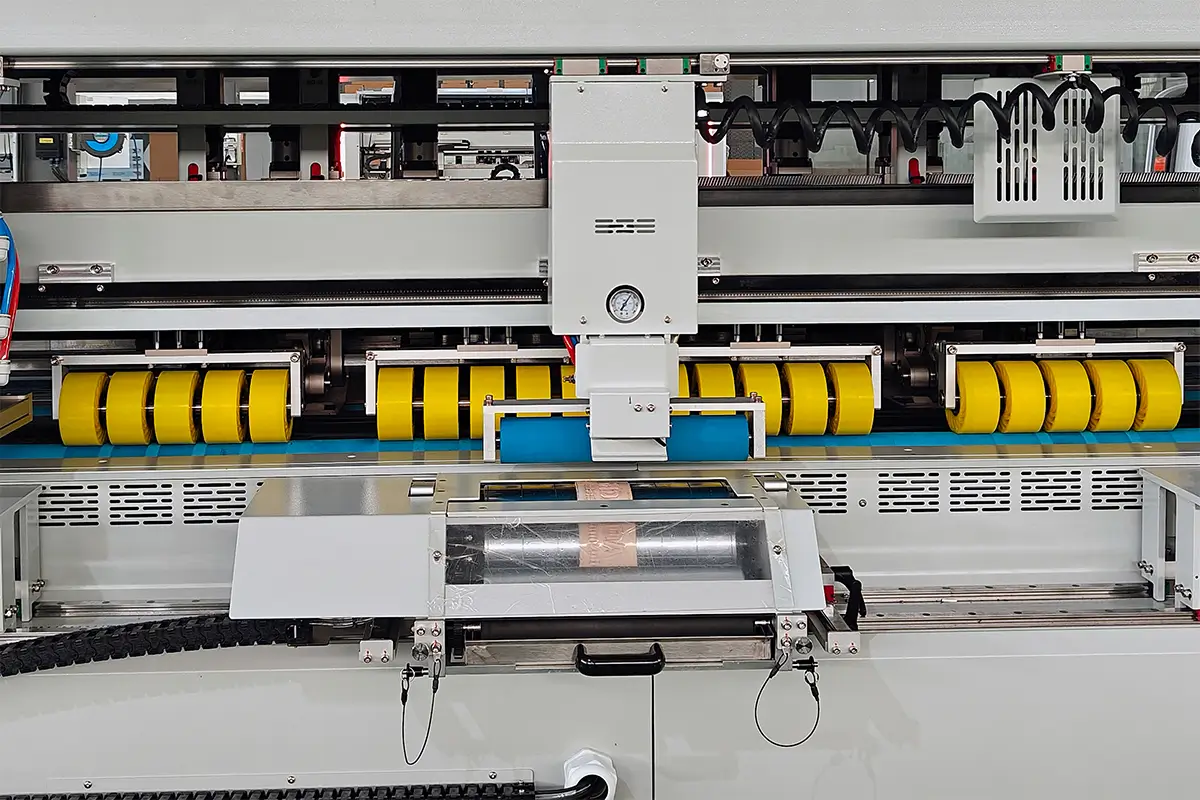
Flexographic printing (flexo printing) is a traditional high-volume printing method widely used in corrugated packaging manufacturing.
It works by using:
- Custom printing plates for each design
- Ink rollers and impression cylinders
- Mechanical setup and calibration processes
Advantages of flexo printing:
- Very efficient for large-volume production
- Low unit cost in long production runs
- Stable and mature technology
Limitations:
- Requires printing plates for every design
- High setup time for job changes
- Limited flexibility for small batch orders
- Higher cost for frequent design updates
- Inefficient for short-run production
While flexo printing remains essential for mass production, it is less suitable for today’s fast-changing packaging environment.
3. What Is Digital Printing for Corrugated Boxes?
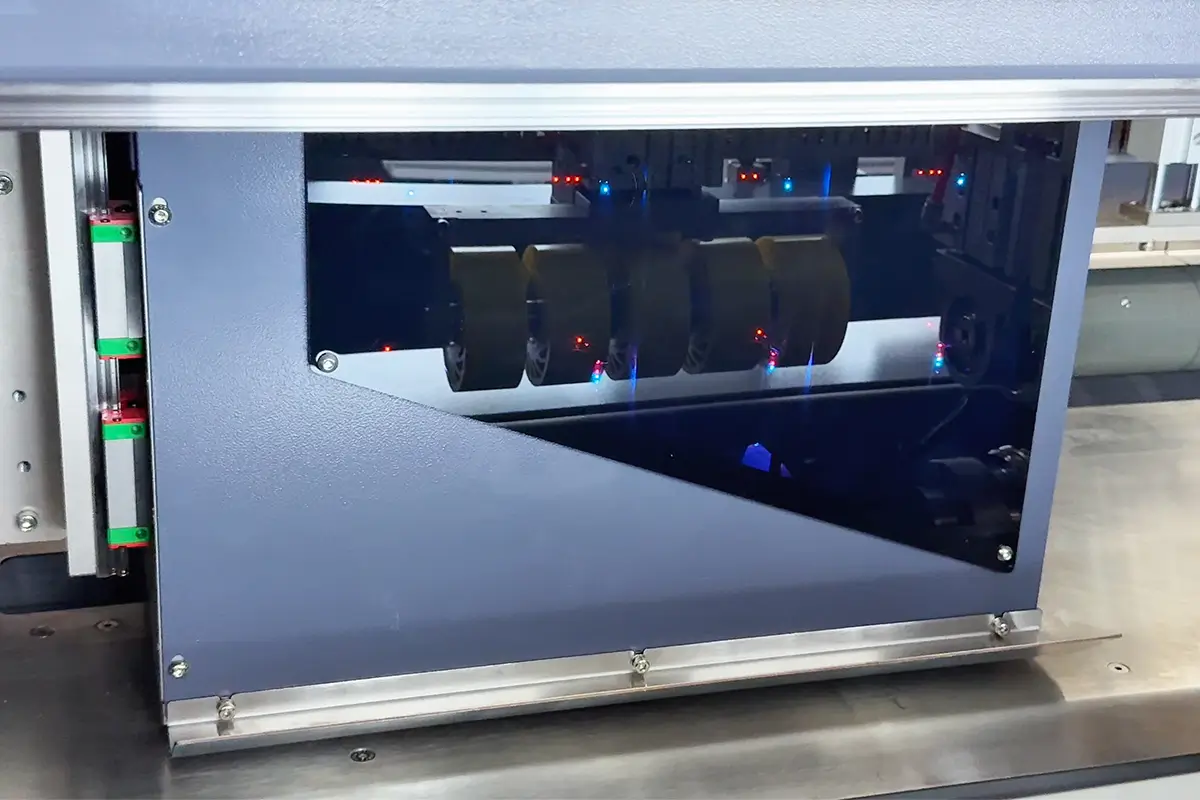
Digital printing is a modern printing technology that transfers designs directly from digital files onto corrugated board without the need for printing plates.
Key characteristics:
- Plate-free production process
- Direct file-to-print workflow
- Fast job switching capability
- High customization flexibility
Advantages of digital printing:
- Ideal for short-run production
- Supports multiple designs in one production cycle
- No plate cost or storage required
- Fast setup and changeover
- High-resolution graphic output
Digital printing is especially suitable for custom corrugated boxes, e-commerce packaging, and on-demand manufacturing models.
4. Digital Printing vs Flexo Printing: Full Technical Comparison
4.1 Setup Cost and Preparation Time
Flexo printing requires:
- Plate production for each design
- Machine setup and ink calibration
- Trial runs before production
This increases both time and cost, especially for small orders.
Digital printing eliminates plate-making entirely, allowing:
- Instant job switching
- Minimal setup time
- Lower operational cost for short runs
4.2 Production Efficiency
Flexo printing is highly efficient for long, repetitive production runs.
However, in modern factories handling multiple small orders daily, frequent setup changes reduce overall efficiency.
Digital printing improves efficiency in:
- Multi-SKU production environments
- Short-run and urgent orders
- Frequent design changes
4.3 Print Quality
Digital printing offers strong advantages in:
- High-resolution graphics
- Gradient color reproduction
- Photo-quality packaging designs
Flexo printing performs well for:
- Simple graphics
- Large-volume standardized packaging
For brand-driven packaging, digital printing is increasingly preferred.
4.4 Order Flexibility and Customization
Digital printing enables:
- Personalized packaging
- Regional design variations
- Seasonal packaging updates
- QR code and variable data printing
Flexo printing is limited due to plate dependency and setup requirements.
4.5 Waste Reduction and Sustainability
Digital printing reduces waste by eliminating:
- Plate setup waste
- Trial-run material loss
- Excess ink adjustments
This makes it a more sustainable solution for modern packaging production.
5. Market Trend: From Mass Production to On-Demand Packaging
The corrugated packaging industry is moving toward a new production model driven by:
- E-commerce growth
- Fast product lifecycle changes
- Brand customization requirements
- Demand for smaller order quantities
As a result, on-demand packaging production is becoming a global trend.
Manufacturers are no longer focused only on large-scale production. Instead, they must handle multiple small, fast-changing orders efficiently.
6. The Real Challenge: Fragmented Production Workflow
Although digital printing solves the printing problem, many factories still face structural inefficiencies:
Traditional production involves separate steps:
- Printing
- Cutting or die-cutting
- Box forming
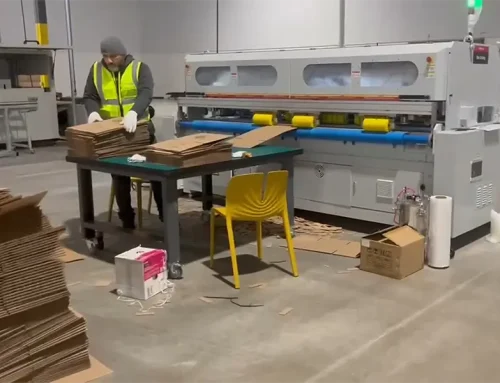
- Manual handling and transfer
This fragmented workflow leads to:
- Long production lead times
- High labor dependency
- Increased material handling
- Lower overall efficiency
To fully benefit from digital printing technology, manufacturers need integrated production systems.
7. Integrated Solution: Digital Printing + Box Making System
The next stage of corrugated manufacturing is integration.
By combining printing and box forming into a single workflow, manufacturers can significantly improve productivity.
Benefits of integrated systems:
- Reduced setup and changeover time
- Streamlined production process
- Lower labor requirements
- Improved order flexibility
- Better efficiency for short-run production
This is where modern corrugated box making machine with digital printing systems become essential.
8. Aopack BM2800-Ultra: Digital Corrugated Box Making Solution
To meet the evolving needs of the packaging industry, Aopack has developed advanced integrated systems designed for short-run and on-demand production environments.
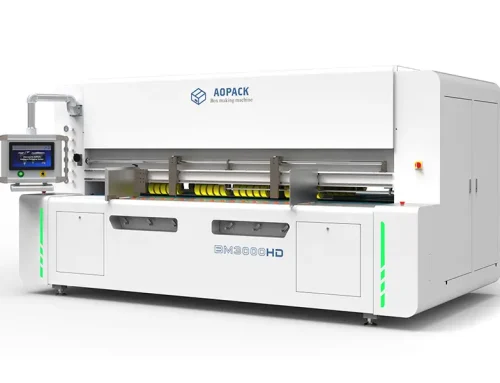
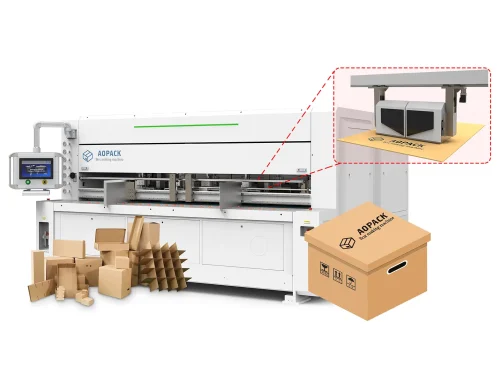
One of the key solutions is the Aopack BM2800-Ultra Corrugated Box Maker with Digital Printing Function.
This system is designed to combine digital printing and box making into one streamlined production process.
Key capabilities of BM2800-Ultra:
- Integrated digital printing module
- Automatic corrugated box forming system
- Fast job change and setup flexibility
- Optimized for short-run production
- Reduced manual handling and labor dependency
Business advantages:
- No printing plates required
- Faster response to customer orders
- Reduced production complexity
- Higher efficiency in multi-order environments
- Better suitability for e-commerce packaging demand
By integrating printing and box manufacturing, BM2800-Ultra helps manufacturers transition from traditional flexo-based workflows to a more flexible and digital production model.
9. Conclusion: The Future of Corrugated Box Printing
Flexographic printing remains an important technology for large-scale, standardized corrugated box production.
However, the market direction is clear:
- Digital printing is becoming the preferred solution for short-run and customized packaging
- Flexo printing remains strong in high-volume production
- Integrated systems are defining the future of packaging manufacturing
The real competitive advantage in the future will not come from printing alone, but from how efficiently manufacturers can combine printing, automation, and box making into one system.
Solutions like the Aopack BM2800-Ultra represent this new generation of corrugated production technology—helping factories move toward faster, smarter, and more flexible manufacturing.
Leave A Comment